TWO-TIME TECHNICAL FOUNDER / COMPUTER VISION

MUKUL
INGLE

I build the future before it becomes obvious.

↘
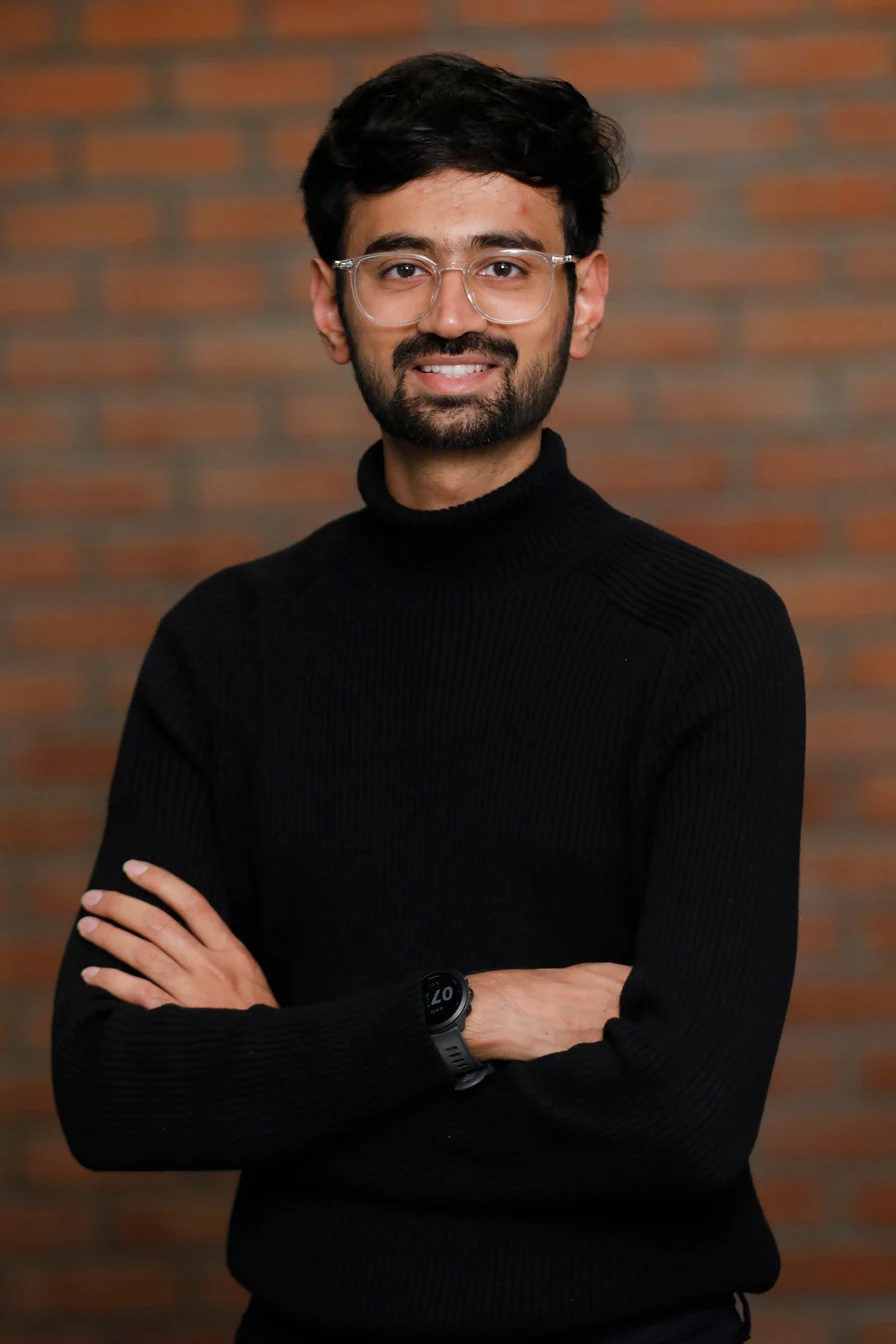
Mukul Ingle, technical founder and computer vision engineer
₹95 CrMetaShop valuation reached
₹1.5 Cr+venture funding raised
₹80 L+equity-free support secured
7+ yearsshipping computer vision

I turn uncertain technical possibilities into capabilities that people can adopt.

My work sits between research, product, and production. I define the decision that matters, test the riskiest assumption, and build the lightest system that can produce credible evidence. Successful experiments then become reliable capabilities—with named users, stable interfaces, known limitations, and measurable operating value.

  1. 01Ambiguous opportunity

    Identify the decision, user, workflow, and unresolved uncertainty.

  2. 02Capability requirement

    Translate the opportunity into data, performance, integration, and operating requirements.

  3. 03Decision-led experiment

    Define a hypothesis, baseline, evaluation split, success threshold, budget, and stop condition.

  4. 04Reusable system

    Create stable interfaces, validation, monitoring, versioning, lineage, and ownership.

  5. 05Adopted product

    Measure whether the capability improves a real decision, workflow, or business outcome.

An experiment should not exist merely to produce a metric. It should change a product, roadmap, or investment decision.

THREE DECISIONS THAT SHAPED MY WORK

The operating choices behind the outcomes.

01

SUPERSET LABS
DATA FOUNDATION

Global benchmarks did not represent Indian roads.

Globally available vehicle datasets did not adequately represent Indian commercial vehicles such as the Tata Ace, Mahindra pickups, or the many locally modified configurations encountered in live traffic.

Decision We treated the problem as a data and taxonomy problem before treating it as a modelling problem.

  • Captured representative operational footage.
  • Defined an India-specific vehicle taxonomy.
  • Curated and annotated more than 100,000 vehicle instances.
  • Fine-tuned and evaluated YOLO-based detection and classification.
  • Designed the system for edge and central-GPU deployment.
  1. Domain gap
  2. Local taxonomy
  3. Representative data
  4. Model adaptation
  5. Field validation
  6. Deployment economics
Evidence94–96% classification and axle-counting accuracy, with up to 25 lanes served per central GPU server.

A globally strong model is a baseline—not proof that it understands the deployment environment.

02

METASHOP
TECHNOLOGY CHOICE

The most impressive model was not automatically the right product.

At MetaShop, the goal was to generate photorealistic spatial assets from ordinary captures across real estate, automotive, and e-commerce environments.

Photogrammetry

Operationally accessible, but unreliable on reflective and metallic surfaces.

NeRF

Stronger visual fidelity, but difficult to convert and deploy within product constraints.

Gaussian Splatting

The strongest balance of reconstruction success, visual quality, rendering speed, automation, and device delivery.

Output qualityReconstruction successProcessing timeRendering performanceDevice constraintsAutomationIntegration effortCustomer suitability

We did not select the newest technology. We selected the capability that best satisfied the complete product contract.

Build
When the capability creates strategic differentiation and the evidence justifies ownership.
Adapt
When an existing foundation is useful but requires domain-specific data, evaluation, or interfaces.
Use existing
When an available capability meets the requirement and ownership would not create meaningful advantage.
Stop
When the evidence, economics, or adoption path no longer supports further investment.
03

SAMSUNG MOBILE ADVANCE
STAKEHOLDER ALIGNMENT

Communication depth can change. Technical truth cannot.

During MetaShop’s Samsung Mobile Advance engagement, I worked across Samsung’s research, startup-program, and ventures teams, alongside MetaShop’s research and engineering teams. The scope evolved from on-device static 3D Gaussian Splatting to dynamic 4D reconstruction for smartphones and XR devices.

  • Reframed the problem and technical scope.
  • Worked with both research teams on feasibility and architecture.
  • Established a phased balance between fidelity and device performance.
  • Replanned research and engineering around the revised objective.
  • Communicated different depths without changing the evidence or limitations.
Research teams

Architecture, novelty, evaluation, technical risk

One shared
evidence base
Engineering teams

Interfaces, dependencies, performance, delivery plan

Program + business

Milestones, feasibility, value, risk, and decisions

When stakeholders disagree, I identify the decision being contested, separate facts from assumptions, and define the evidence needed to resolve it.

FROM RESEARCH TO REUSABLE CAPABILITY

A paper proves an idea. A product must survive repeated use.

  1. 01Research result

    Demonstrates technical possibility under stated conditions.

  2. 02Reproducible experiment

    Has controlled inputs, baselines, evaluation, and documented limitations.

  3. 03Reusable capability

    Another team can consume it safely and repeatedly without depending on its original researcher.

  4. 04Integrated capability

    Has a stable contract, versioning, monitoring, cost and latency characteristics, and an operational owner.

  5. 05Adopted product

    Fits a real workflow and produces measurable customer or operational value.

MetaSplats / IEEE ICIP 2024 MetaSplats began as sparse-view novel-view-synthesis research. Its value extended beyond publication by informing MetaShop’s production approach to capture guidance, reconstruction, validation, and automated spatial-asset delivery.

A capability is reusable when another team can consume it safely and repeatedly without depending on the researcher who created it.

HOW I MEASURE PROGRESS

Technical evidence must connect to operating value.

Model accuracy
Does the user make a better decision?
Generalization
Can the capability enter a new geography, category, or environment?
Label efficiency
How much annotation effort and adaptation time are saved?
Inference efficiency
What does each asset, stream, or area cost to process?
Calibrated confidence
Which outputs can be automated safely, and which require review?
System reliability
Does performance hold under real operational conditions?
Capability reuse
How many products or teams can adopt it without rebuilding it?
Research velocity
Are experiments resolving uncertainty or only accumulating prototypes?

A technically successful capability can still be a product failure if it has poor economics, no clear consumer, or no place in the customer’s workflow.

FOUNDER OPERATING PRINCIPLES

Build for the decision after the demo.

  1. 01Start with the operational pain

    Technology becomes valuable only when attached to a consequential workflow.

  2. 02Test the riskiest assumption first

    Use the cheapest credible experiment that can change the decision.

  3. 03Make uncertainty explicit

    Document assumptions, unsupported conditions, failure modes, and stop criteria.

  4. 04Build for adoption, not only demonstration

    A convincing demo is the start of product work, not the end.

I build at the intersection of technical ambition, operating clarity, and evidence.

VENTURE / 2022 - PRESENT

METASHOP AI

Co-Founder and CTO. Owned the architecture, model pipelines, C++/Python services, distributed processing, and production deployment behind automated 3D and 4D asset generation.

METASHOP INTRO

MetaShop in motion.

A concise introduction to MetaShop's platform, enterprise use cases, and product direction.

VIDEO TO 3D / ENTERPRISE

Making spatial content scalable.

Architected the model pipelines, distributed processing, validation, and production infrastructure behind automatic 3D generation for real estate, automotive, and enterprise inventory.

Technical systems Python, C++, production ML pipelines, distributed processing, feature extraction, AWS, and GCP.

60x faster generation 5 IPs built Zero manual intervention
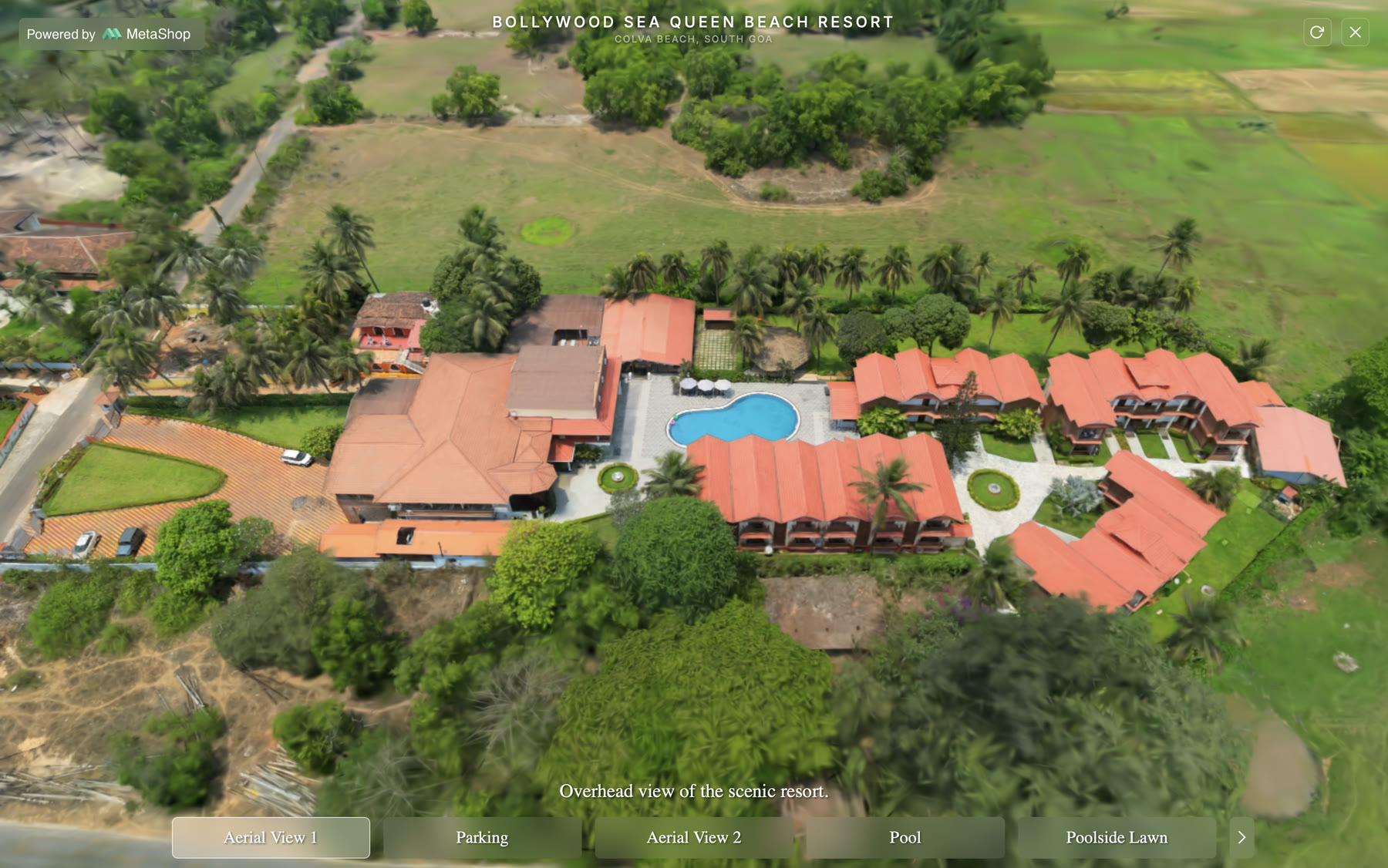
MetaShop spatial reconstruction of Bollywood Sea Queen Beach Resort in Goa

VIDEO TO 3D

Any object. Any category.

Photorealistic assets from simple captures, without sensors or specialist hardware.

Technical systems 3D and 4D Gaussian Splatting, NeRF-to-Mesh, multi-view geometry, and novel-view synthesis.
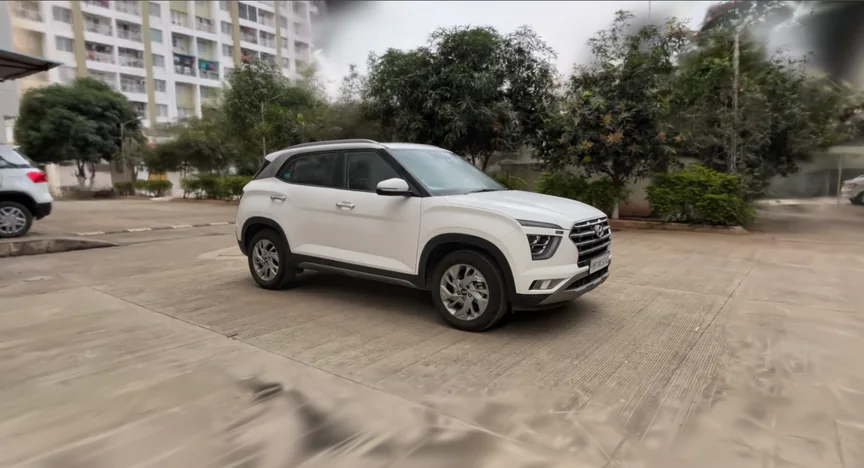
Car captured and reconstructed by MetaShop

AUTOMOTIVE

From driveway to digital twin.

Production pipelines designed to work with everyday devices and uncontrolled input.

Technical systems C++/Python services for ingestion, validation, feature extraction, and distributed asset generation.

SAMSUNG MOBILE ADVANCE

Dynamic 4D on a smartphone.

Led on-device 4D Gaussian Splatting R&D with Samsung SRI-B and Korea HQ. MetaShop was selected as the only India partner.

Technical systems Mobile-optimized 4DGS, smartphone camera pipelines, dynamic 4D representations, and novel IP.
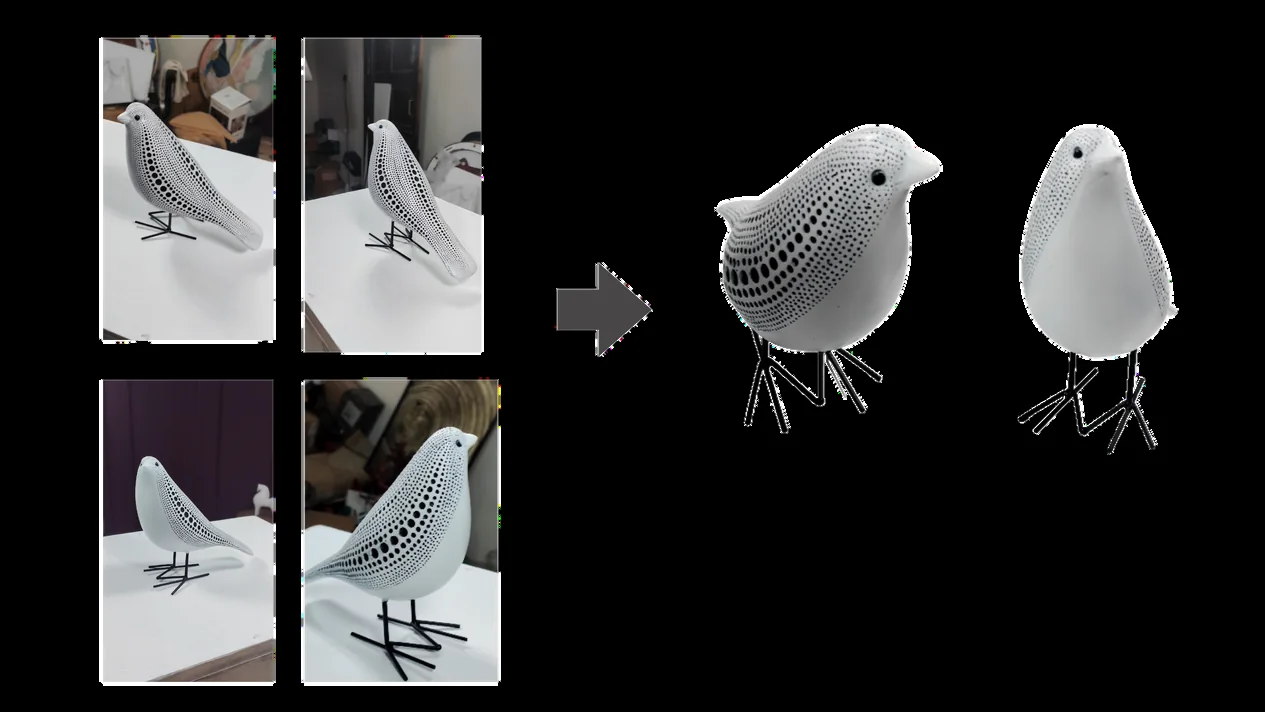
Sparse input images transformed into a 3D result with MetaSplats

METASPLATS / IEEE ICIP 2024

Few images. A navigable 3D world.

Co-authored rapid sparse 2D view to 3D novel view synthesis research and translated it into enterprise product capability.

Technical systems Sparse multi-view novel-view synthesis, neural rendering, and research-to-product deployment.

FIRST VENTURE / 2019 - 2022

SUPERSET LABS

Co-Founder and Deep Learning Engineer. Built production computer-vision systems across YOLO detection, multi-class classification, edge inference, curated datasets, and GPU deployment.
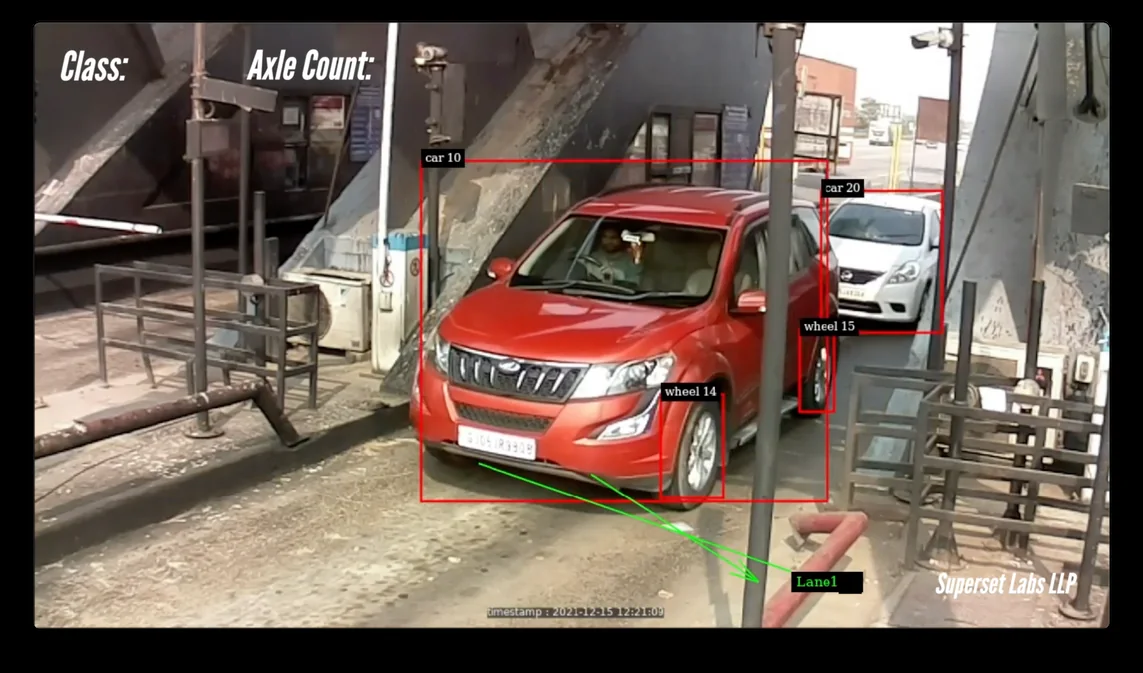
Superset AVC classifying vehicles and counting axles at a toll plaza

SUPERSET AVC / FREE-FLOW HIGHWAYS

India's first AVC built for free-flow traffic.

A YOLO-based vehicle classification and axle-counting system trained on more than 100,000 vehicles and proven with Larsen & Toubro at VBTL.

Technical systems YOLO, LMV/LCV/Truck/Bus classification, axle counting, multi-lane aggregation, edge inference, and central GPU processing.

94-96% accuracy8-10x lower cost and hardware25 lanes per server

TRACE / PUBLIC HEALTH

A contactless health checkpoint.

Built during the pandemic to screen mask use, temperature, heart rate, blood oxygen, and heart rhythm in public spaces.

Technical systems Computer vision, edge inference, and production ML deployment.
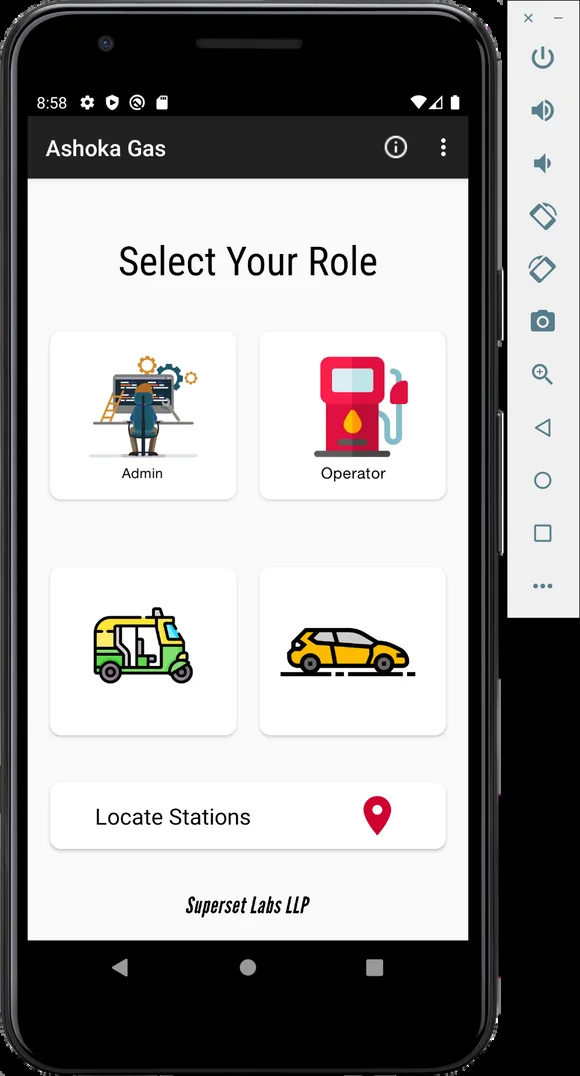
Ashoka Gas CNG coupon payments application

ASHOKA GAS / PAYMENTS

Replacing paper coupons with a live payment system.

Built a multi-location CNG credit application for Unison Enviro. It handled more than ₹1.9 Cr in transactions by Q3 2021.

Technical systems Scalable backend services, transaction workflows, SQL/MongoDB, and production deployment.
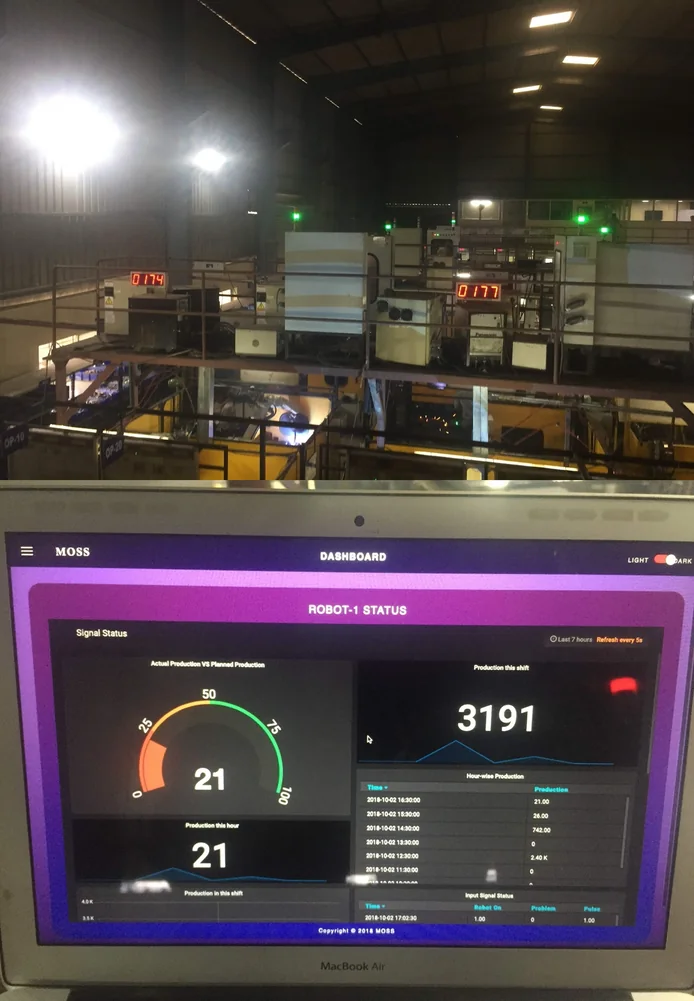
Production monitoring dashboard deployed at Yeshshree Press Comps

YESHSHREE PRESS COMPS / INDUSTRY 4.0

Seeing a factory's production in real time.

Connected welding robots to a single live production-count dashboard, giving operators a clear view of targets, output, and machine health.

Technical systems Real-time data pipelines, system integration, observability, and production monitoring.
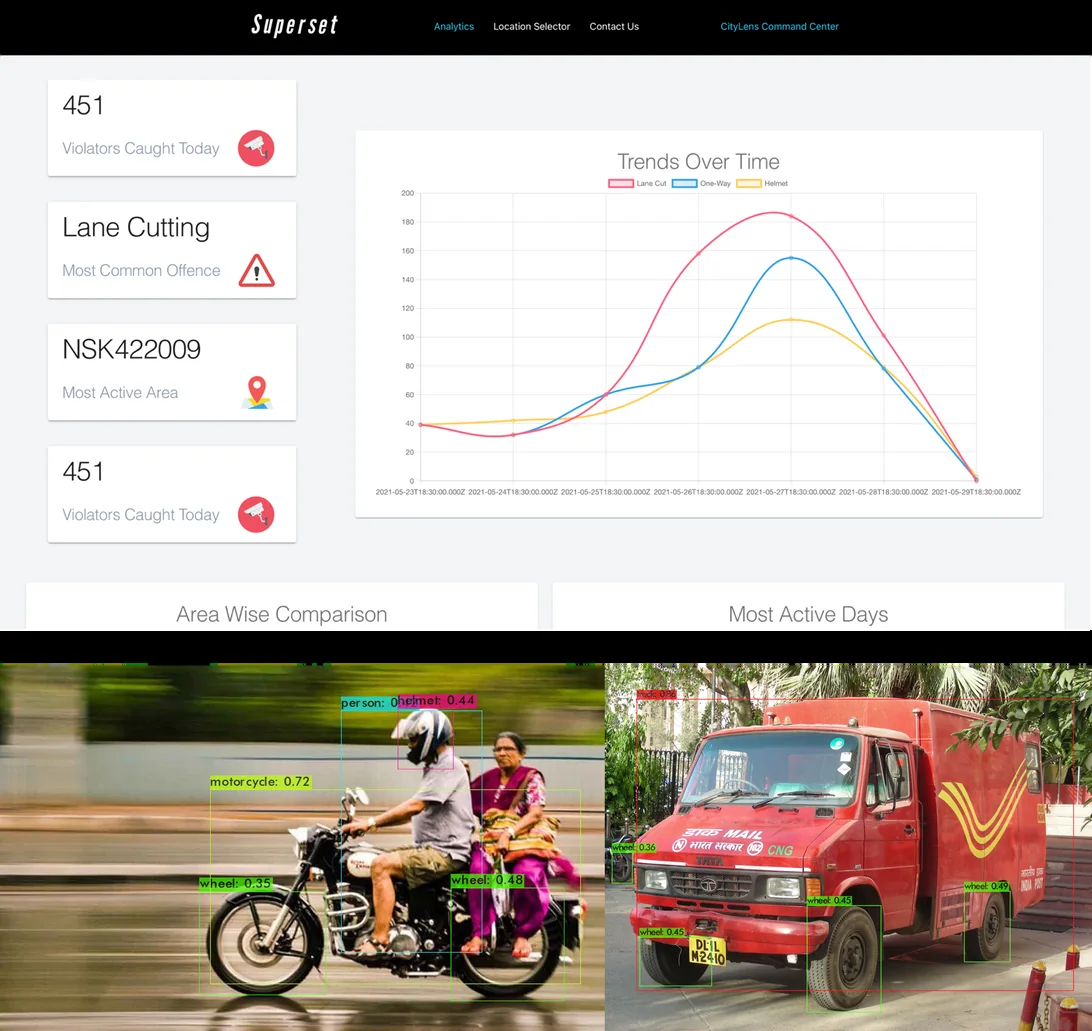
CityLens command center and real-time traffic computer vision

CITYLENS / SMART MOBILITY

The platform that made highways measurable.

Real-time traffic detection, classification, alerts, and analytics for smart cities and infrastructure teams. CityLens became the technical base for Superset AVC.

Technical systems YOLO detection, multi-class classification, edge GPU deployment, and curated production datasets.

FIELD PROOF

Built in the real world, not only in the lab.

Two views of the system: toll-plaza validation and on-vehicle perception.

Vehicle classification and axle counting at Larsen & Toubro's VBTL toll plaza.

On-vehicle perception with vehicle and person detection plus road-surface segmentation.

RESEARCH / RECOGNITION

Ideas earn trust when they survive scrutiny.
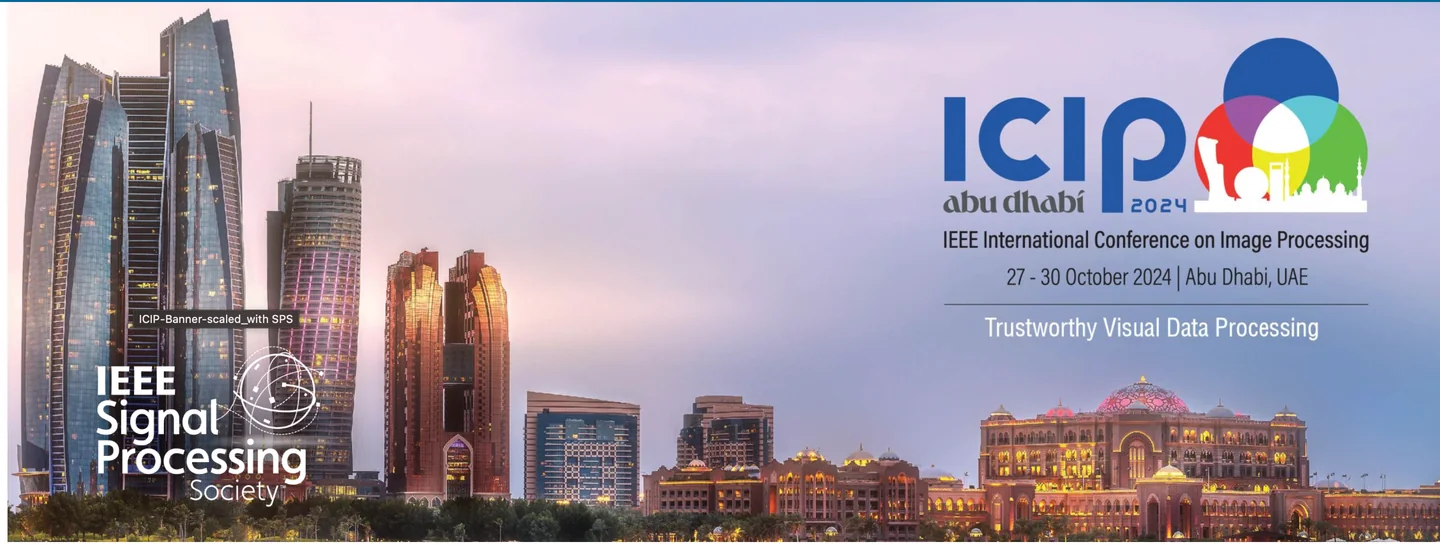
IEEE ICIP 2024 conference in Abu Dhabi
IEEE ICIP 2024MetaSplats research published and presented in Abu Dhabi.
Samsung Mobile AdvanceOnly India partner selected for on-device 4D innovation.
ICASSP SPS Startup CompetitionSecond place from 1,500 global participants.
Google for Startups₹80 L+ in equity-free support and dedicated mentorship.

WHAT COMES NEXT?

I am interested in problems that look premature, until they suddenly look inevitable.

Computer vision, spatial AI, on-device intelligence, and the next non-obvious shift.

Let's talk